
Bali’s real estate market has historically been driven by proximity to iconic coastlines and pristine cultural centers. However, as the island navigates unprecedented tourist numbers and expanding expat communities, severe traffic congestion has become a major roadblock to sustainable economic growth. To combat this, the Indonesian government has greenlit a series of transformative, multi-billion dollar infrastructure mega-projects that are set to fundamentally redraw the island’s economic map. From high-tech rail networks to cross-island toll roads, these major developments are shifting the core drivers of property appreciation. For real estate investors, understanding how these transport corridors redefine accessibility is no longer just an advantage—it is the ultimate key to predicting where land values will experience the most explosive growth.
The Bali LRT Project: Revolutionizing Connectivity and Urban Density
The most anticipated development on the island is the Bali Light Rail Transit (LRT) system, engineered to directly link Ngurah Rai International Airport with high-density tourism hubs like Kuta, Seminyak, and eventually Canggu. Historically, the grueling, unpredictable commute from the airport to southwestern coastal villas has deterred certain demographics of premium tourists and business professionals. By introducing a reliable, rapid transit alternative, the LRT will instantly decentralize urban density and supercharge land values surrounding planned transit-oriented developments (TODs). Areas within a comfortable walking distance of LRT stations are expected to see a massive premium on rental yields and commercial land prices, transforming surrounding neighborhoods into highly sought-after, walkability-focused urban hubs.
The Gilimanuk-Mengwi Toll Road: Unlocking Potential in Untapped Regions
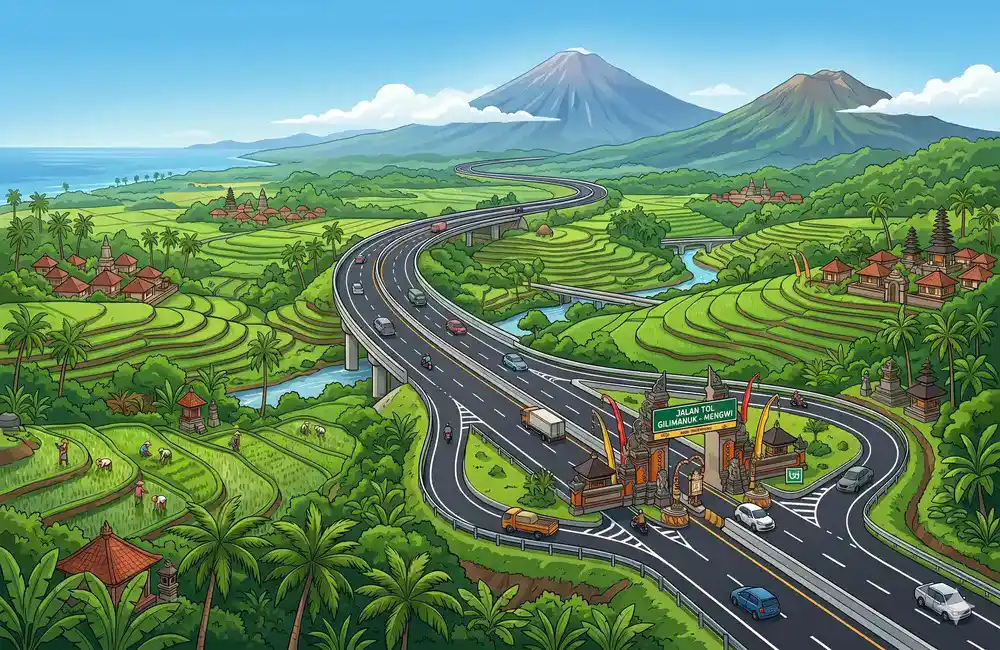
While the south coast absorbs the immediate benefits of rail transit, the mega-scale Gilimanuk-Mengwi Toll Road is quietly unlocking the massive economic potential of Bali’s western and northern regencies. By drastically cutting travel times between the primary ferry port of Ketapang-Gilimanuk and the central southern hubs, this major highway bypasses congested local roads and opens up vast tracts of untouched land. Previously overlooked districts within Tabanan and Jembrana are suddenly becoming highly attractive options for large-scale eco-resorts, logistics hubs, and affordable residential estates. Early-stage land speculators are aggressively acquiring plots near upcoming toll gates, anticipating a profound outward migration of both businesses and residents seeking relief from southern density.
Strategic Shortcut Networks: Upgrading Micro-Market Accessibility
Beyond the large-scale highway networks, local provincial governments are aggressively expanding the island’s network of arterial “shortcuts” and bypass roads to relieve notorious localized traffic bottlenecks. Projects such as the ongoing Ubud-Sukawati bypass expansions and the tactical widening of coastal access roads in Canggu, Pererenan, and Uluwatu are rapidly altering micro-market dynamics. When a newly constructed shortcut trims twenty minutes off a daily commute, it immediately elevates the real estate viability of peripheral villages that were once considered too isolated for premium villa developments. Consequently, land values in these secondary pockets are surging overnight, allowing nimble boutique developers to secure highly profitable plots right before mass market commercialization catches up.
Smart Capital Allocation in the Era of Infrastructure Expansion
To successfully ride this unprecedented wave of structural development, modern property investors must transition from speculative guesswork to rigorous, data-driven spatial analysis. Relying solely on current aesthetic appeal is a flawed long-term strategy; instead, capital should be strategically positioned in alignment with official government master plans and public works announcements. Investors who acquire land in emerging infrastructure corridors before ground breaking stand to secure maximum capital appreciation over the next decade. However, performing strict zoning (ITR) due diligence remains non-negotiable, ensuring your chosen plot is legally designated for development before the surrounding infrastructure drives land values permanently out of financial reach.