
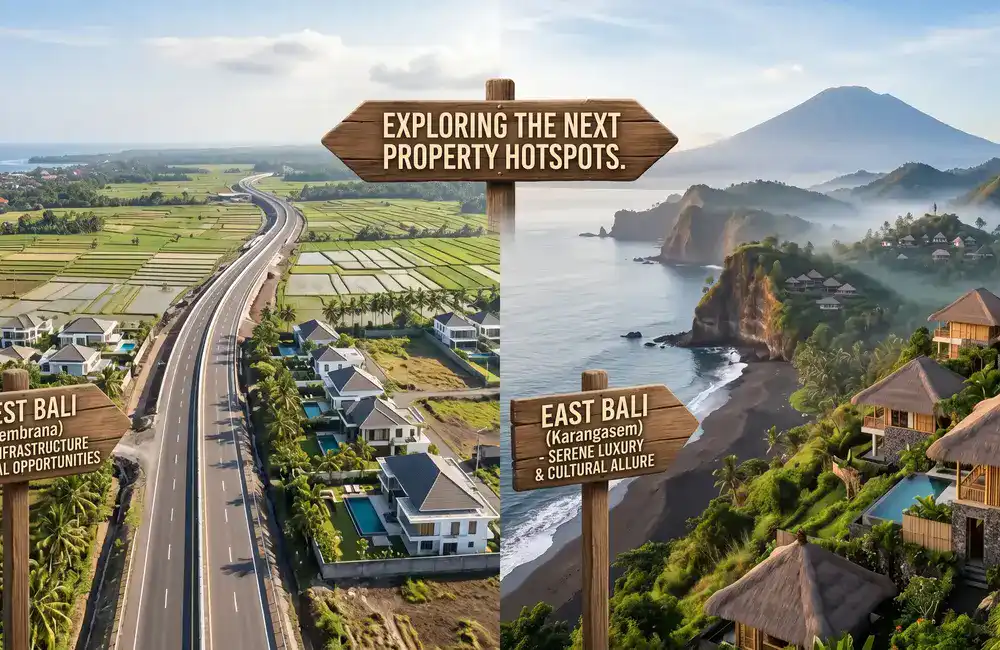
With South Bali’s real estate market reaching near-impenetrable levels of price inflation, smart investors and local buyers are turning their sights toward uncharted territories. For years, the limelight belonged strictly to Badung and Denpasar, leaving the island’s eastern and western wings largely quiet. Today, that narrative is shifting rapidly as the sheer financial impossibility of buying southern land forces a massive geographical expansion. East and West Bali are no longer just weekend road-trip destinations; they are quickly transforming into the island’s most promising real estate frontiers, offering realistic entry prices, untouched natural landscapes, and incredible long-term growth potential.
West Bali and the Catalyst of New Infrastructure
The western region, spanning across parts of Tabanan and extending into Jembrana, is currently experiencing a quiet real estate boom fueled by massive infrastructure promises. The most significant catalyst driving this momentum is the development of the strategic highway project connecting Gilimanuk to Mengwi, which aims to slice travel times across the island significantly. Traditionally, West Bali was dismissed by residential buyers due to heavy cargo traffic and arduous travel times to the commercial south. However, as this vital infrastructure project progresses, forward-thinking investors are snatching up affordable beachfront and agricultural plots that will soon be effortlessly connected to the rest of Bali, guaranteeing substantial capital appreciation over the next decade.
East Bali’s Serene Coastal and Cultural Allure
On the completely opposite side of the island, East Bali—predominantly Karangasem and the outer fringes of Gianyar—presents a radically different but equally lucrative investment appeal. While the west attracts infrastructure-driven growth, the east thrives on its spectacular, rugged coastline, rich spiritual heritage, and dramatic volcanic backdrops. Neighborhoods around Candidasa, Sanur’s northern expansions, and even the diving capitals of Amed are seeing a steady rise in eco-conscious villa developments and boutique hospitality projects. Because land values here remain remarkably grounded compared to the hyper-inflated rates of the south, buyers can still secure expansive parcels with unobstructed ocean or cliffside views without compromising their entire financial future.
A Sustainable Reset for Local Buyers and Investors
Ultimately, the rise of East and West Bali represents a much-needed cooling mechanism and a healthier reset for the island’s highly chaotic property market. This outward expansion gives local residents and mid-tier investors a genuine second chance to own freehold property without going up against the overwhelming financial muscle of foreign currency. Furthermore, because these regions are developing in a more modern, regulated era, there is a collective push to avoid the zoning mistakes, severe traffic congestions, and rapid environmental degradation seen in saturated southern hubs. Investing in the east or west is no longer about settling for second best; it is a strategic play for a more balanced, sustainable, and affordable future in Bali.